
Rhode Island is showing encouraging signs of emerging from its recent shallow recession, according to University of Rhode Island economist Leonard Lardaro, with strength in manufacturing, housing and retail sales pointing to an economy moving forward.
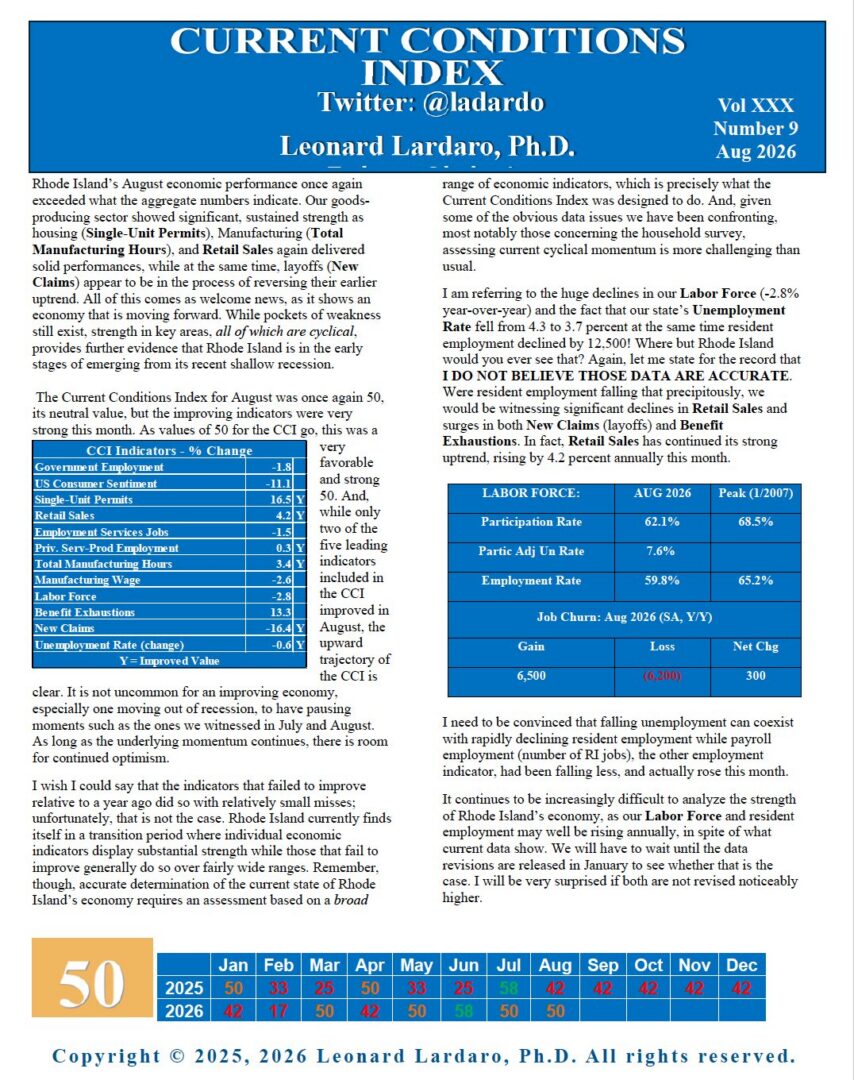
Lardaro’s August Current Conditions Index registered 50, its neutral level, but the strength of the improving indicators made the performance more encouraging than that number alone suggests.
“As values of 50 for the CCI go, this was a very favorable and strong 50,” Lardaro wrote.
Released Oct. 26, the August report marks the fifth time in six months that the index reached its neutral level or better. Six of its 12 indicators improved compared with a year earlier.
Strength in key areas
Retail sales, a consistent source of strength through the post-pandemic period, increased 4.2% compared with August 2025. Total manufacturing hours rose 3.4%, while single-unit building permits, an indicator of new home construction, increased 16.5%.
New unemployment claims, which track layoffs, declined 16.4%. Lardaro said layoffs appear to be reversing their earlier upward trend.
These improvements carry particular significance because they involve areas sensitive to changes in the economic cycle. Their combined strength provides further evidence that Rhode Island is in the early stages of moving out of recession, according to Lardaro.
The August index matched July’s reading of 50, following a stronger reading of 58 in June. Lardaro described such pauses as a normal feature of an improving economy, particularly one emerging from recession.
“As long as the underlying momentum continues, there is room for continued optimism,” he wrote.
An uneven transition
The report also identifies areas where improvement has yet to take hold.
Benefit exhaustions, an indicator of long-term unemployment, rose 13.3% compared with a year earlier. Manufacturing wages declined 2.6%, while employment services jobs, a leading labor market indicator, fell 1.5%.
Government employment decreased 1.8%, which Lardaro attributed to declines in federal government employment. Private service-producing employment edged up 0.3%.
U.S. consumer sentiment, a national indicator included in the index, declined 11.1%.
Lardaro characterized Rhode Island as being in a transition period, with substantial strength in some indicators alongside continued weakness in others. Assessing that transition requires looking across a broad range of measures—the approach underlying his Current Conditions Index.
Looking beyond the unemployment rate
Lardaro also explained why he is awaiting revisions to employment data to obtain a clearer picture of the state’s labor market.
The figures show Rhode Island’s unemployment rate declining from 4.3% to 3.7% compared with a year earlier, even as the labor force fell 2.8% and resident employment declined by 12,500.
In his assessment, those reported declines in the labor force and resident employment do not fit the strength evident elsewhere in the economy.
If resident employment were falling that sharply, Lardaro explained, he would expect significant declines in retail sales and increases in layoffs. Instead, retail sales continued to grow and new unemployment claims fell.
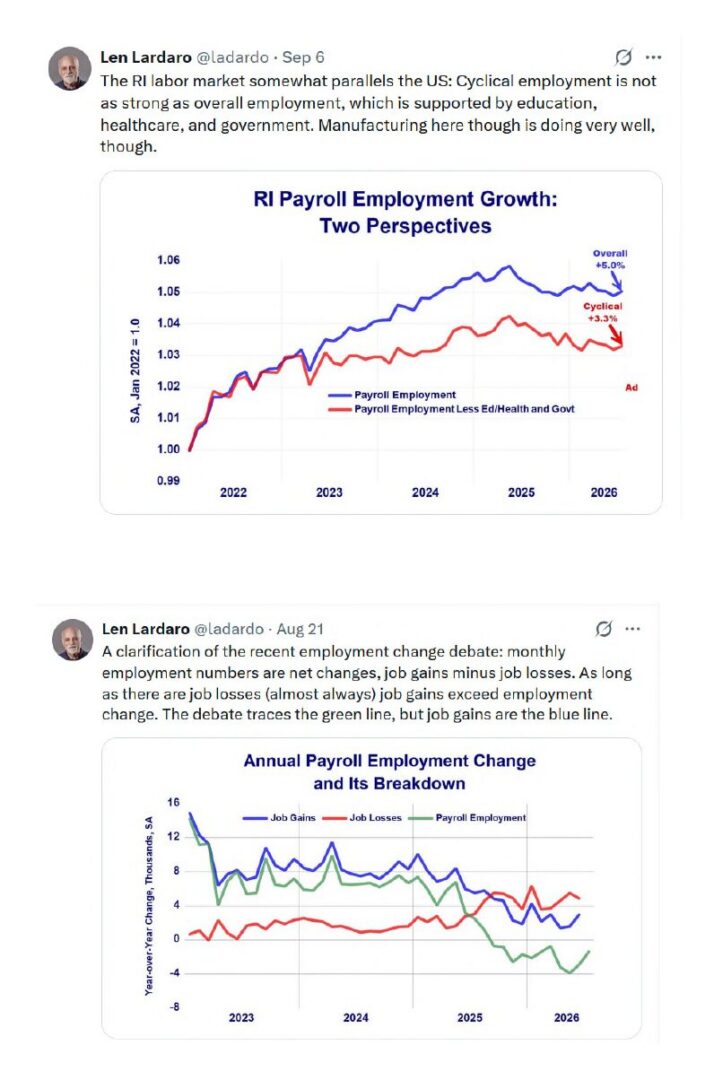
He also noted that payroll employment—the number of jobs located in Rhode Island—rose compared with a year earlier in August.
Lardaro believes forthcoming revisions could show a stronger performance in both the labor force and resident employment than the current figures indicate.
His August assessment points to an economy making progress through an uneven recovery, with manufacturing activity, homebuilding permits, consumer spending and fewer layoffs providing reasons for continued optimism.
The Current Conditions Index, created by Lardaro, measures the strength of the present economic climate in Rhode Island by following the behavior of 12 indicators.
The post Rhode Island Making Progress Out of Recession, URI Economist Lardaro Says appeared first on RINewsToday.


