
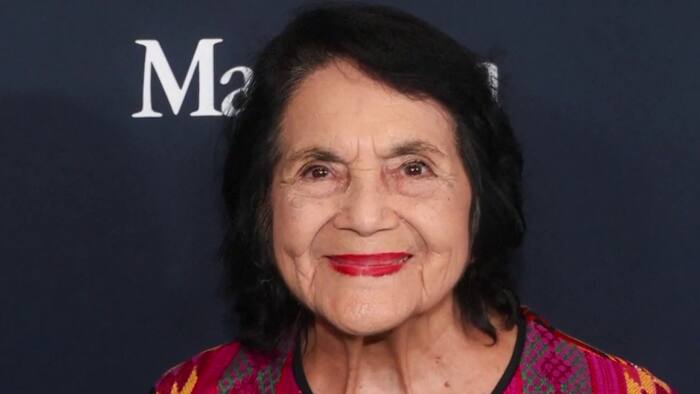
Civil rights leader Dolores Huerta, who co-founded the United Farm Workers of America and spent decades fighting for social justice, is being remembered for her lifelong commitment to empowering others.
Huerta died Wednesday at her home in Bakersfield, California, at 96 after a battle with cancer.
Jess Ramirez, a longtime friend who knew Huerta for four decades, said Huerta’s determination to fight injustice inspired generations of people to speak up for what they believe in.
“Dolores represented hope because she never gave up. She never gave up on this country,” Ramirez said.
Even into her 90s, Huerta continued marching in protests and encouraging activists to advocate for causes including racial equality, economic justice, LGBTQ+ rights and women’s rights.
Ramirez said Huerta’s willingness to speak out helped inspire young women to become leaders themselves.
“She influenced a lot of young ladies to aspire to be powerful,” Ramirez said.
Huerta co-founded the United Farm Workers of America, advocating for better wages and safer working conditions for agricultural workers through nonviolent organizing and activism.
Her decades of advocacy earned her numerous honors, including the Presidential Medal of Freedom in 2012.
In a statement honoring Huerta, the Congressional Hispanic Caucus described her as a national and international icon whose “courage, conviction, and relentless pursuit of justice helped change the course of history.”
The caucus said Huerta challenged injustice across the labor movement and the broader fight for civil rights, empowering generations to demand dignity, equality and opportunity.
“Her legacy transcends borders, generations, and movements,” the statement said. “She helped shape the conscience of our nation and demonstrated that the fight for justice requires both the courage to challenge the status quo and the conviction to never give up.”
The caucus also emphasized Huerta’s significance to the Latino community and her impact on the country as a whole, describing her life as a testament to the power of collective action.
For Ramirez, Huerta’s death also raises questions about who will carry that work forward.
“Other communities, whether they’re Asian or Black or white, they have tremendous leaders, national leaders,” Ramirez said. “Dolores was one of them. And now she’s gone. Now who’s gonna pick her place?”
The Congressional Hispanic Caucus closed its statement by emphasizing the responsibility of future generations to continue Huerta’s work.
“Dolores, your legacy is our responsibility. Your fight continues through all of us who believe in a better future. Rest in power, hermana,” the statement said.
Ramirez said Huerta’s legacy extends beyond the rights she fought to protect. It also lives on through the people she inspired to continue fighting for equality and justice.


